I can recycle that?!
Recycling is not necessarily a new concept to me, but Germany takes things to a whole new level! USA should follow suit, and so your prepared when it does happen, here are some tips and explanations to make it easier.
According to wiki, Germany produces 30 million tons of garbage annually, and with the Green Dot system being one of the most successful recycling initiatives, things have changed for those making the garbage. The manufacturers and retailers have to pay for a "Green Dot" on products: the more packaging there is, the higher the cost, meaning less paper, thinner glass and less metal being used, thus creating less garbage to be recycled.
The key ingredient though is proper disposale of all of that trash, which is where you come in. Once you understand just what is actually recyclable and not, its a breeze.
The easy stuff:
Plastic: Cool thing about all of the bottles here, you pay 25 cents more. Why is that cool? Well its a recycling deposit, or a "Pfand", and there is a handy machine outside or at the front entrance to every grocery store to return them to when they are emptied. You will get your money back in the form of a reciept for the store you returned them to, they can be returned and collected to redeem many reciepts at once, or you can return 100 bottles at once, whatever you prefer. There are some bottles though that the machine will not take, and that will need to go in the general yellow bin (but those didnt cost you the extra 25 cents).
Glass: Really any kind of glass jar or bottle that does not have a "Pfand", belongs in the glass bins. So wine bottles, jam jars, oil, juice and even bath-salt bottles. Things not allowed in "Glass Bins": Ceramics, china, mirrors and wine corks (so take those out before tossing in). Another thing is that glass is sorted by color: green, brown and clear glass. Find these bins all over town in all neighborhoods. Hint though - Please dont recycle at 2am, you dont want angry neighbors from the loud crashes as they get thrown in!
Paper: all packaging made of paper and cardboard, newspapers, magazines, waste paper, paper bags, etc, belong in the blue bins. Leave out tissues, You are supposed to flatten boxes before putting them in the bin, and make sure there is no plastic inside.
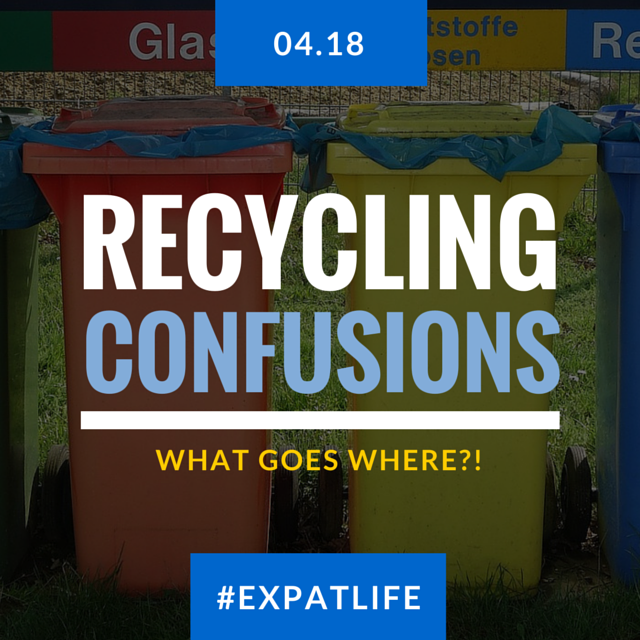
Most bins aside from glass are at your doorstep, and are color coded; green, blue, yellow, brown and gray. The color of the lid is the most important. It's important to know that not all cities have the exact same system. You may not find a brown or yellow bin at your doorstep, and paper will probably go into a blue bin. If you dont have a yellow bin, you may have to put plastic materials into a yellow plastic bag like us, called a Gelb Sack, that we place outside for pickup Monday mornings (but its different for each apartment of course). You can typically get these at local convienece stores.
Advanced Recycling:
The yellow Bins and the Green Dot: Cans, plastic, polystyrene, aluminum, empty spray cans, and "composite" materials like cartons made of a mixture of materials belong in the yellow bin or yellow bags. (Try not to stack items inside each other, like two yogurt cups inside each other because all of this gets sorted by hand, which also means its a nice favor to them to rinse everything out - no need to wash - but it will stink less and be easier to sort.)
The "other stuff": Biological stuff is anything thats ok for the compost heap in a gardener's back yard. This can be kitchen scraps, leftover food, coffee filter sheets (even tea bags) and gardening waste. I recommend taking the bio brown bags out to the bin every day because it can get quite smelly!
If you dont have a separate brown bin, you are allowed to throw it in the gray "everything else" bin. This includes cigarettes, old household objects, textiles, diapers, and other personal hygiene items, etc. All of these will be BURNED (::Evil Laugh:: Mwahahahaha!).
The hazardous waste: which includes fluorescent bulbs, batteries, paint cans, chemicals, adhesives, disinfectants, insecticides, etc. You will receive a notice from your town council on when and where the truck collecting this kind of waste will be. Dont ever throw these in the gray bin, the burning of the waste could result in extremely poisonous and dangerous situation.
Soon enough you will be in the recycling mindset and know what to buy and from where to minimise the amount of waste that you not only buy but have to get rid of in the end. Look for bottles that have a "Pfand", you will have to pay the extra 25 cents at first, but know that money will come right back and no plasic will fill up the landfills!
You can get a calendar with collection detaisl from your registration office in town or from the landlord normally. of course you could always just wait until your neighbors take theirs out and follow suit!
Facts from: http://www.howtogermany.com/pages/recycling.html